Strategic Workforce Planning in Practice: An Example
Here is a simplified, fictional example. An industrial company with 2,000 employees plans to shift part of its business toward software-based services over the next four years.
Strategy: Grow the services business while keeping manufacturing stable.
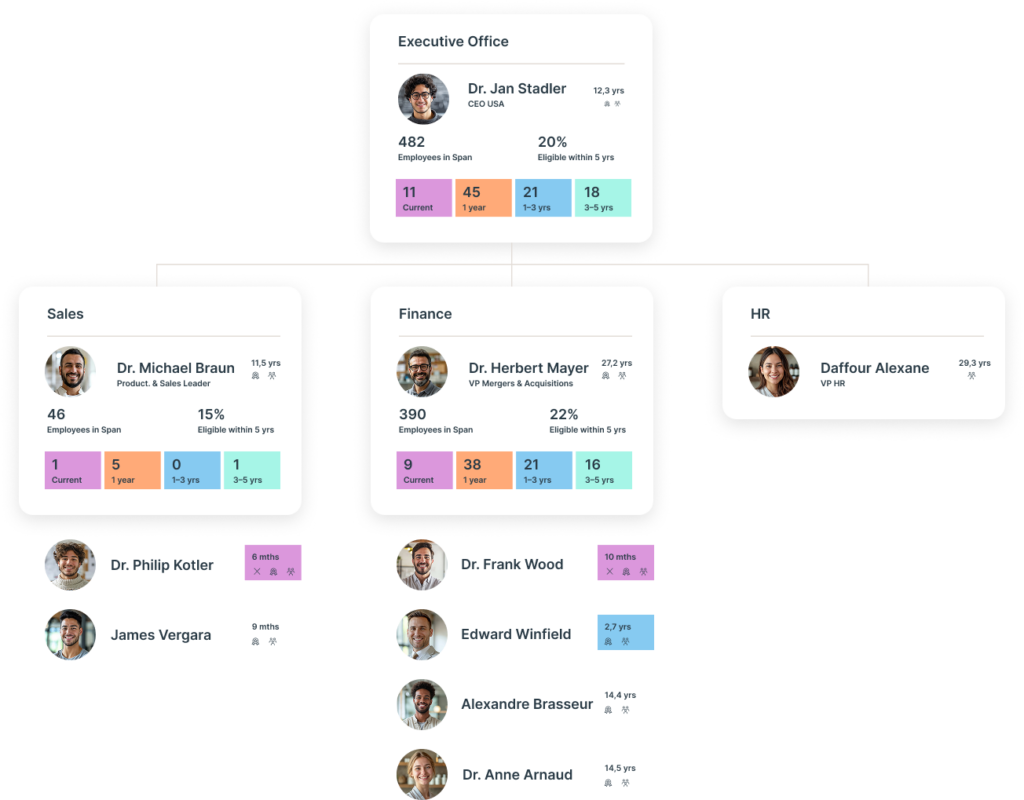
Current workforce: A large share of skilled manufacturing staff is over 55. The software team lacks cloud and data skills.
Future needs and gap: The services unit needs additional capacity in new job families. Manufacturing faces a knowledge gap as experienced employees retire.
Actions: Targeted hiring for the new roles, reskilling programs for staff moving out of manufacturing, and succession planning to secure critical know-how.
Scenarios: The plan is modeled for faster and slower growth of the services business to spot budget risks early.